Termites & Wood Destroying Pest Identification
Know exactly what you are dealing with
Need Help? Give Us A Call!
Types Of Wood Destroying Pests
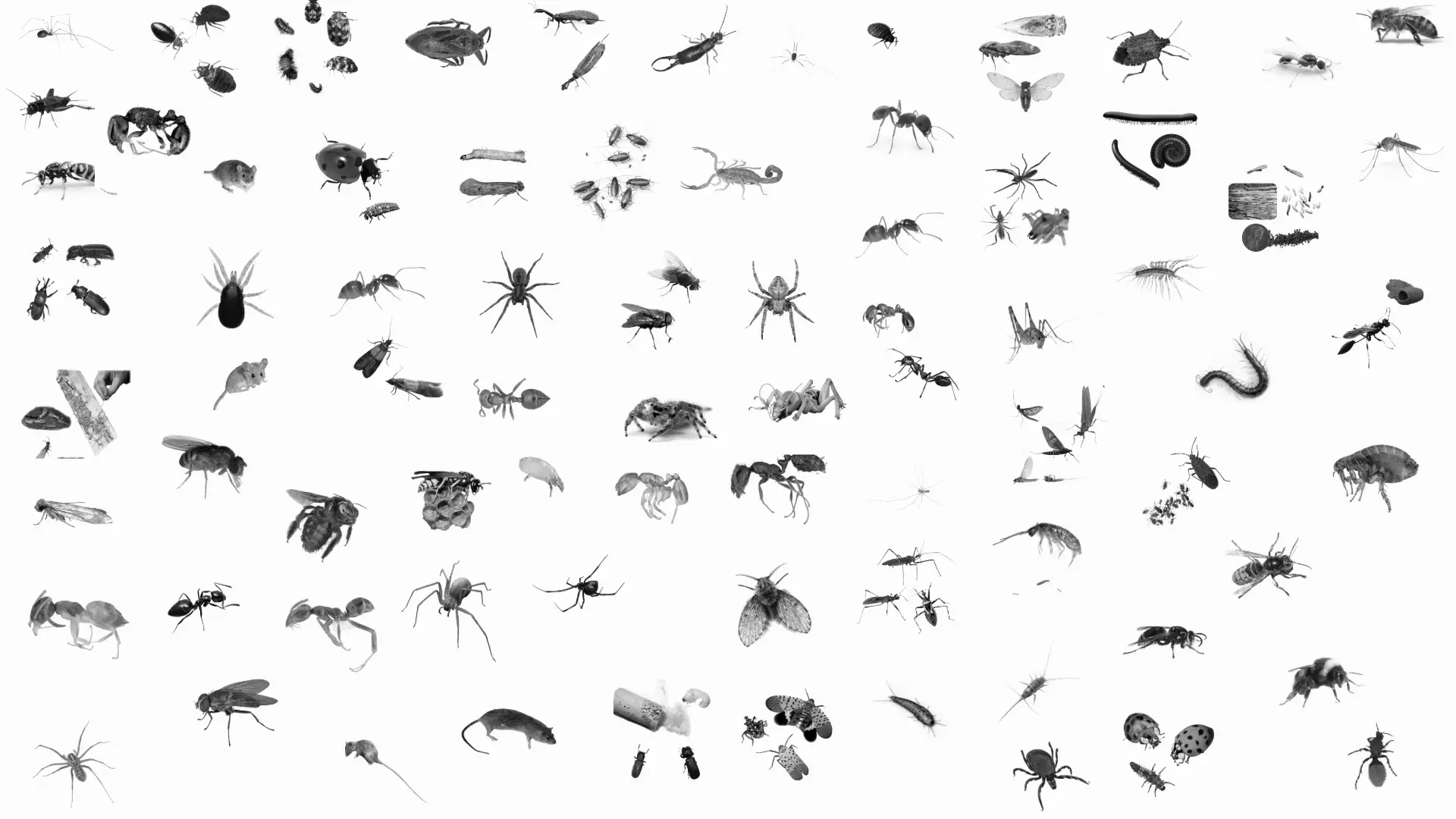
Identify what is eating away at your wood, since the control strategies between these different species vary.
Give Us A Call Today!
Drywood Termites
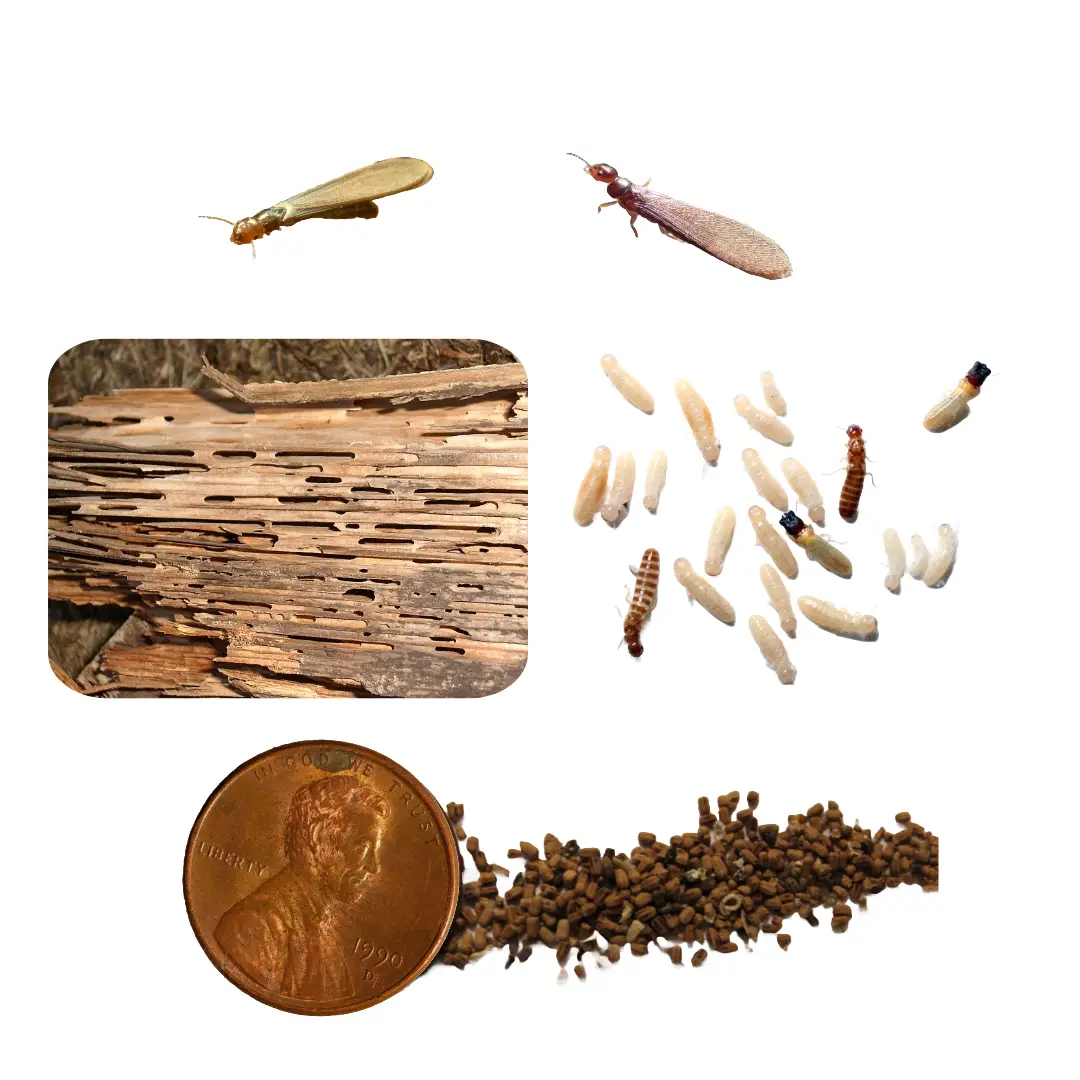
Drywood termites live and feed in dry wood, often found in structural timber, furniture, and hardwood floors. They do not require contact with soil and can infest any wooden structure.
Subterranean Termites
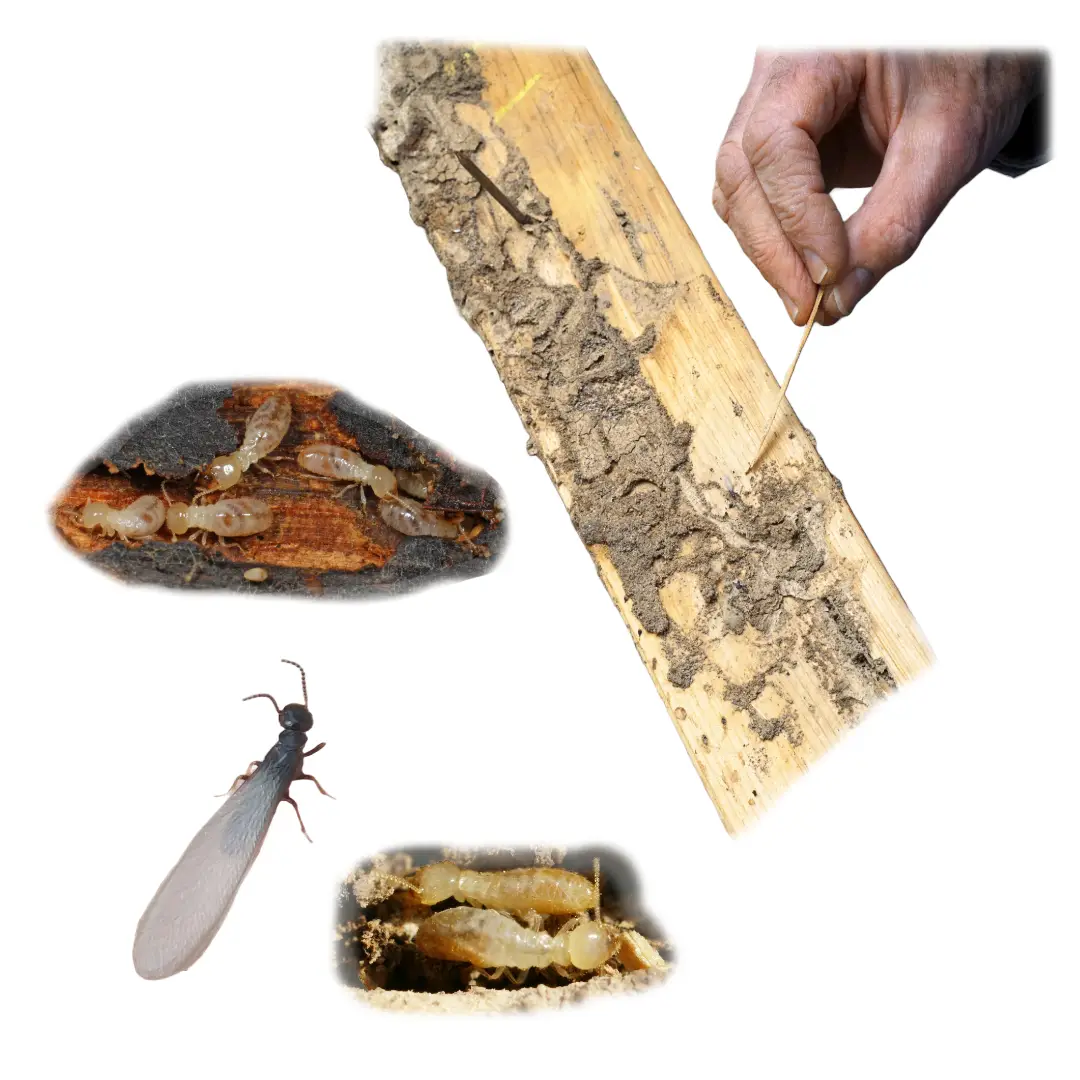
Subterranean termites live in colonies underground and build mud tubes to access above-ground food sources. They are known for causing significant structural damage to buildings by feeding on wood.
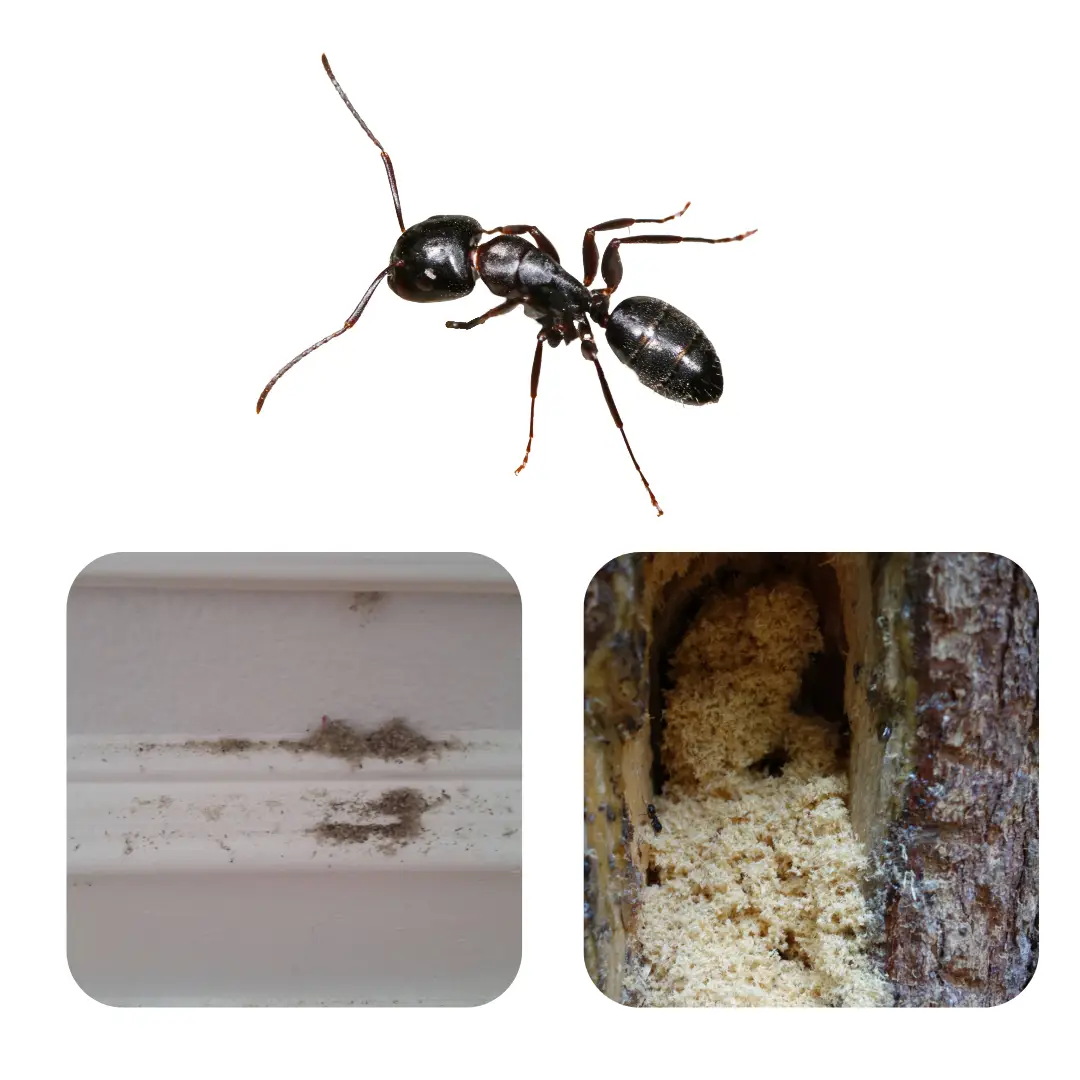
Carpenter Ants
Excavates wood to create nests
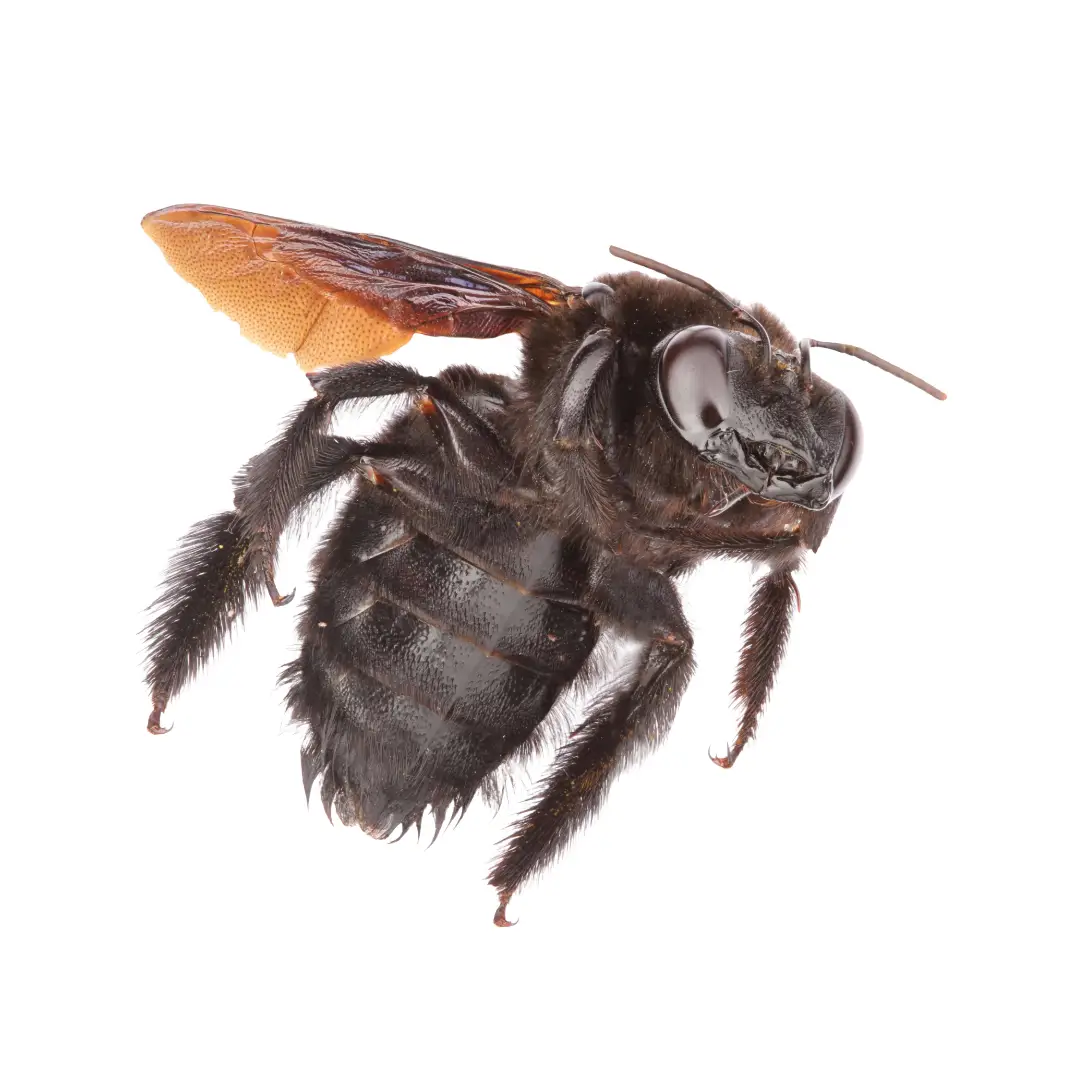
Carpenter Bees
Carpenter bees are solitary bees that burrow into wood to create nests. They are often mistaken for bumblebees but have a smooth, shiny abdomen.
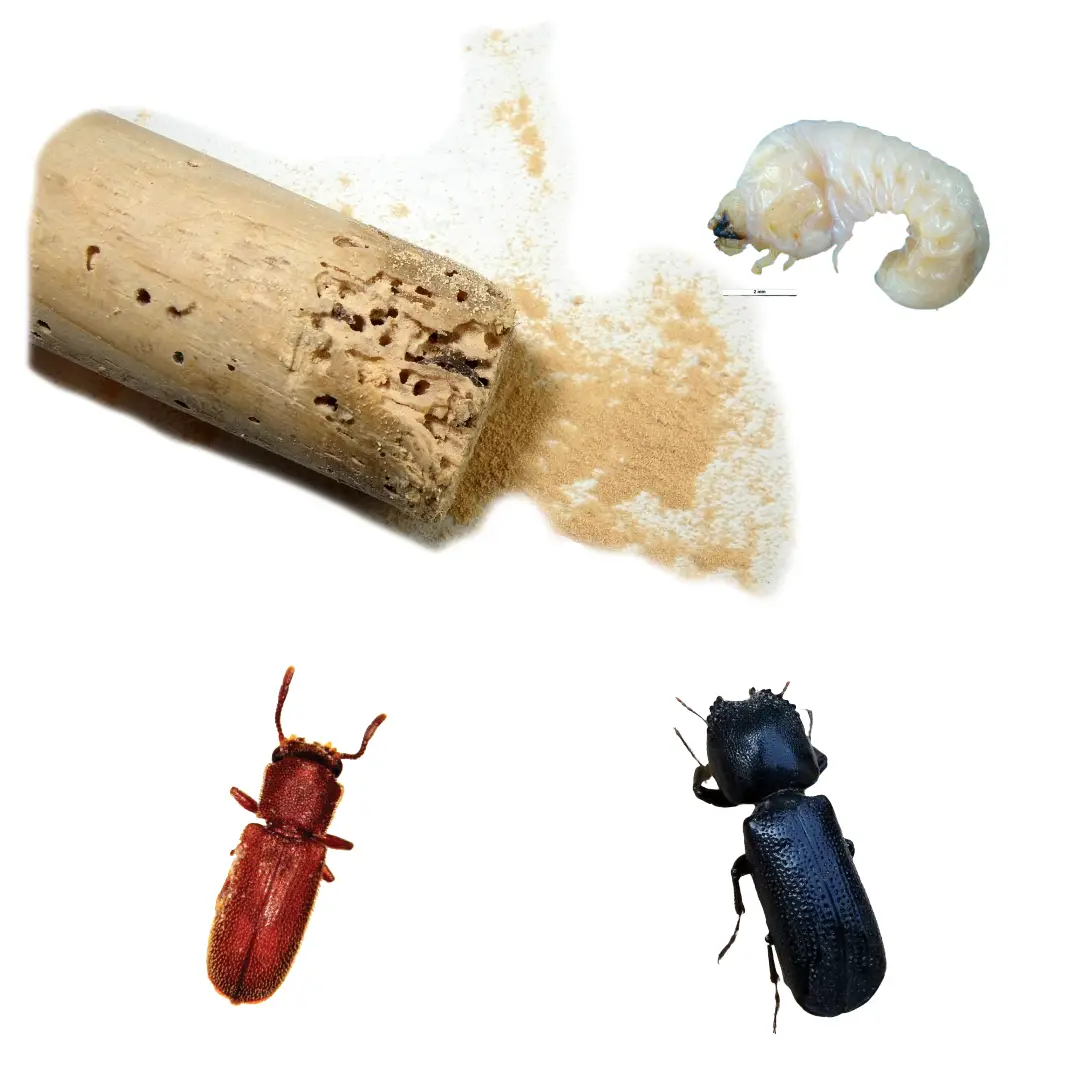
Powderpost Beetles
Powderpost beetles infest and damage wood, leaving behind fine powdery frass. They can cause significant structural damage over time.
Quick Identification Guide: Do You Have Termites?
Check for Physical Signs
- Mud Tubes: Termites often build mud tubes (small tunnels made of soil and wood particles) along walls, foundations, or other structures. These tubes protect them from predators and keep them moist.
- Damaged Wood: Tap on wooden structures. If they sound hollow or are soft and easy to puncture, it might indicate termite damage. Look for tunnels in the wood.
- Frass (Termite Droppings): Drywood termites leave behind small, pellet-shaped droppings that look like sawdust.
- JJ Greive of Home Inspections Of Puget Sound, CC BY-SA 3.0 <https://creativecommons.org/licenses/by-sa/3.0>, via Wikimedia Commons
Look for Swarmers
- Winged Termites: During the warmer months, reproductive termites (also known as swarmers) emerge to form new colonies. They have two pairs of long, equal-sized wings and can often be mistaken for flying ants.
Check the Wings
- Discarded Wings: After swarming, termites shed their wings. If you find a pile of wings near windows, doors, or light fixtures, it could be a sign of termites.
Differentiate from Ants
- Ants vs. Termites:
- Body Shape: Termites have a straight, uniform waist, while ants have a pinched, segmented waist.
- Antennae: Termites have straight, beaded antennae, whereas ants have elbowed antennae.
- Wings: Termite wings are equal in size, while ants have larger front wings and smaller hind wings.
Differentiate from Other Wood Destroying Pests
- If the above signs don't match, consider other pests:
- Carpenter Ants: These can also damage wood, but they do not eat it. Look for sawdust-like material without pellet-shaped droppings and smooth, clean tunnels in the wood.
- Powderpost Beetles: These leave behind fine, powdery wood dust and tiny exit holes in wooden surfaces.
Talk To Our Pest Control Team Now!

We Will Make Sure You Are Satisfied
At Pesky Critters we are fully invested in making sure you are completely happy with our services performed at your home or business. We take great efforts to communicate what to expect from our services, however, sometimes those little critters throw us a curveball, and if/when they do, our team will return and figure out the proper solution!
Ready To Schedule Your No Risk Service?!
Get A Free Estimate
Thank you for your submission!
Let Us Handle The Pests.
Don't go at it alone, let us help take care of these nasty critters for you. Give us a call and set up an appointment. We will make sure you are taken care of.